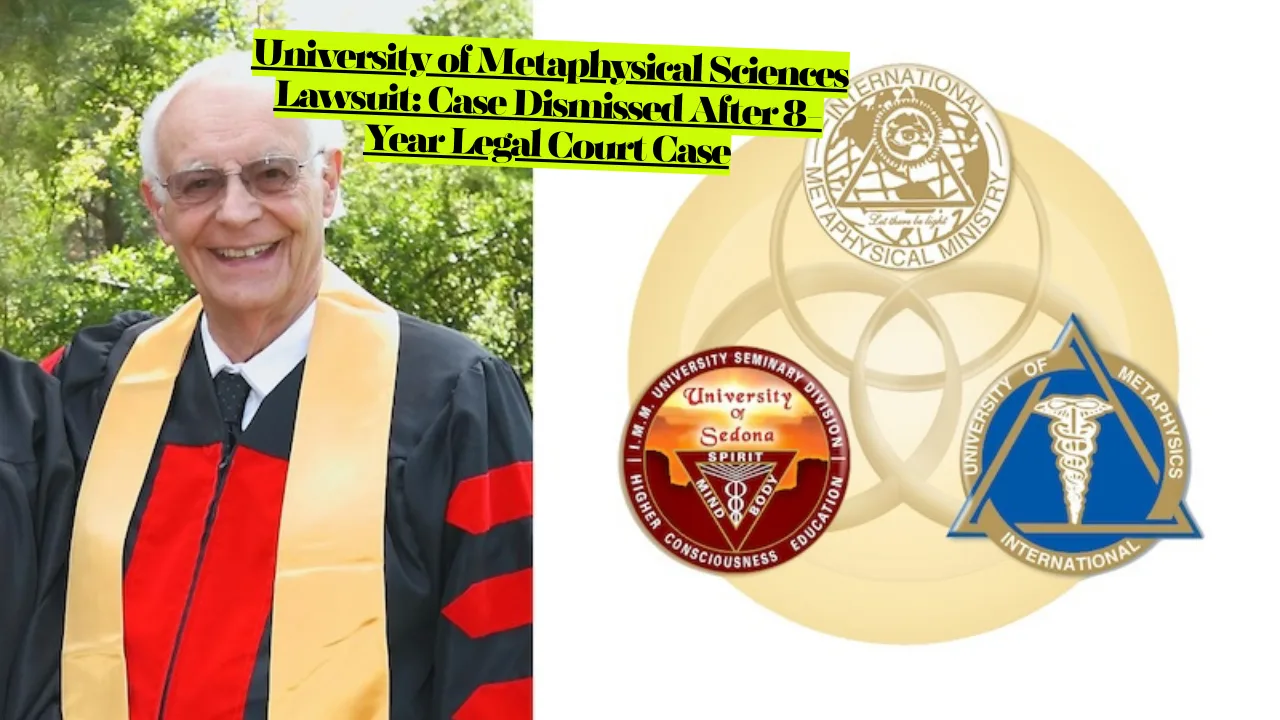
UMS Lawsuit Dismissed: Clarity for Your Spiritual Education Journey
Navigating the evolving landscape of spiritual education can be a deeply personal and often complex journey. For those considering or currently enrolled in programs with the University of Metaphysical Sciences (UMS), recent legal developments have brought a significant wave of clarity. The widely discussed University of Metaphysical Sciences lawsuit has officially been dismissed, putting an end to a legal saga that had, for some time, cast a shadow of uncertainty over the institution and its students.
This article aims to cut through the noise, providing a comprehensive and factual breakdown of the lawsuit's origins, its progression, and, most importantly, what its dismissal means for prospective students, current learners, and alumni dedicated to their spiritual path. Understanding these developments is crucial for making informed decisions about your metaphysical studies and career.
Understanding the University of Metaphysical Sciences (UMS) Model
Before diving into the specifics of the legal challenge, it's important to grasp what UMS is and how it operates. Founded as a nonprofit entity under the Wisdom of the Heart Church, UMS has established itself as a distinctive force in spiritual education. While headquartered in Arcata, California, its reach is global, thanks to a robust online platform that makes its programs accessible to students worldwide.
UMS offers a range of degrees—bachelor’s, master’s, and doctoral—across various metaphysical disciplines. Its curriculum emphasizes spiritual growth, holistic health, and the study of universal laws, aiming to equip individuals for careers in spiritual counseling, energy healing, or metaphysical teaching. A key differentiating factor for UMS is its status as a religious-exempt institution. Unlike traditional universities, UMS is not required to seek accreditation from bodies recognized by the U U.S. Department of Education. Instead, it holds accreditation from spiritual organizations, aligning with its specific mission and focus. This model caters specifically to those seeking education within a spiritual or religious framework, rather than a conventional academic one.
The institution has cultivated a loyal following, reflected in numerous positive reviews on platforms like Trustpilot, where students frequently commend its transformative curriculum and supportive faculty. However, this non-traditional operational model has also made it a target for scrutiny and, as we've seen, legal challenges from competitors within the broader metaphysical education market.
The Legal Challenge: Unpacking the University of Metaphysical Sciences Lawsuit
The recent dismissal marked the conclusion of a significant legal battle for UMS. This wasn't an isolated incident but rather the third in a series of lawsuits initiated by a single competitor: the International Metaphysical Ministry (IMM). IMM operates the University of Metaphysics and the University of Sedona, both located in Sedona, Arizona.
The most recent case, specifically titled International Metaphysical Ministry vs. Wisdom of the Heart Church (Case №4:21-cv-08066-KAW), centered on serious allegations. The core claim was that UMS engaged in deceptive advertising practices, specifically by running Google ads that allegedly used IMM’s trademarked names to divert potential students to the UMS website. Such an action, if proven, could constitute trademark infringement and unfair competition.
UMS vehemently denied these accusations. In its defense, the institution provided Google AdWords reports, which it asserted demonstrated that it had never utilized the competitor's names in its advertising campaigns. Furthermore, UMS highlighted its use of a "negative keyword list," a standard SEO practice designed to prevent its ads from appearing for specific, unwanted search terms, including those related to its competitors. Intriguingly, UMS also put forth a counter-allegation, suggesting that the competitor might have run these ads themselves to frame UMS, pointing to a perceived lack of substantive evidence from the plaintiff to support their claims.
The legal process for this University of Metaphysical Sciences lawsuit was set to proceed to a trial scheduled from June 16–20, 2025. However, before the trial could commence, a crucial development occurred: on May 12, 2025, the lawsuit was dismissed. This dismissal was not the result of a court judgment in favor of one party over the other, but rather a mutual agreement between both parties to drop their respective claims. Crucially, the outcome means that no legal wrongdoing was established against UMS in this case.
Implications of the Lawsuit Dismissal for Your Spiritual Path
The dismissal of the University of Metaphysical Sciences lawsuit carries significant weight for anyone involved with or considering UMS. When a lawsuit is mutually dismissed, it means both parties have agreed to cease legal proceedings, effectively closing the case without a formal finding of guilt or liability. This outcome is a strong indicator that the institution can continue its operations without the immediate threat of the particular claims brought forth by the IMM.
For those considering a degree from UMS, this development provides a clearer picture of the institution's standing. It suggests a renewed sense of stability and allows UMS to continue focusing on its mission of spiritual education, rather than being bogged down by prolonged legal defense. It also addresses many of the lingering questions and concerns that the lawsuit generated, particularly within online discussions and forums where speculation often outpaced facts.
Navigating Non-Traditional Accreditation and Its Value
A persistent area of confusion for many arises from UMS’s religious-exempt status and its spiritual accreditations. It’s vital for students to understand that this is a deliberate operational choice by UMS, aligning with its mission to provide education for specific spiritual vocations. These degrees are designed for those pursuing careers as spiritual counselors, energy healers, or metaphysical teachers, where traditional accreditation from the U.S. Department of Education-recognized bodies may not be a prerequisite for practice.
However, it’s also important to be pragmatic. Degrees from religious-exempt or spiritually accredited institutions might not be recognized by mainstream universities for credit transfers, nor by state licensing boards for professions such as licensed psychotherapy, which typically demand specific, state-approved educational pathways. Therefore, when evaluating such programs, prospective students should:
- Clearly Define Your Career Goals: Understand whether your desired path requires state licensure or traditional academic recognition.
- Research the Accrediting Spiritual Body: Investigate its standards, reputation, and how widely its accreditation is recognized within your chosen spiritual field.
- Examine Program Transparency: A reputable institution will be upfront about its accreditation status and what that entails.
- Engage with Alumni: Seek out current and past students to understand their experiences and the professional utility of their degrees.
Separating Fact from Online Narrative
In the digital age, legal disputes involving online institutions often spark intense online narratives that can be difficult to discern from factual reality. The University of Metaphysical Sciences lawsuit was no exception, generating widespread discussion and, at times, misinformation. It's crucial for individuals to exercise critical thinking when encountering claims, particularly those from competitors or anonymous sources.
The dismissal of the lawsuit, based on a mutual agreement and without a finding of wrongdoing against UMS, should guide how you interpret past and ongoing online discussions. Legal outcomes, particularly official court dismissals, provide a concrete benchmark against which to measure the validity of circulating rumors or competitor-driven allegations. To delve deeper into how to distinguish reliable information from speculation, you might find value in our article: University of Metaphysical Sciences Lawsuit: Separating Fact From Rumor.
Making an Informed Decision About Your Spiritual Education
The dismissal of the University of Metaphysical Sciences lawsuit allows prospective students to approach UMS with greater confidence regarding its operational stability. However, choosing any educational institution, particularly in the specialized field of metaphysics, requires thorough consideration. Here are some actionable tips:
- Clarify Your Goals: What do you truly hope to achieve with your spiritual education? Are you seeking personal growth, professional certification, or academic recognition?
- Research Accreditation Thoroughly: Understand the type of accreditation an institution holds and its implications for your specific goals. Don't confuse spiritual accreditation with regional or national accreditation recognized by the U.S. Department of Education.
- Review the Curriculum in Detail: Ensure the courses, faculty expertise, and program structure align with your spiritual path, learning style, and desired outcomes.
- Examine Testimonials and Reviews: While positive reviews are encouraging, look for comprehensive feedback that addresses various aspects of the student experience, including challenges and how they were resolved.
- Ask Direct Questions: Don't hesitate to reach out to UMS admissions with any questions you have about their programs, accreditation, career support, or the implications of the lawsuit dismissal.
- Consider the "Fit": Ultimately, your spiritual education should resonate deeply with your personal values and philosophical outlook. Ensure the institution's ethos aligns with yours.
For more detailed insights into the latest developments, refer to our comprehensive update: UMS Lawsuit Update: Allegations Dismissed, Facts Revealed.
Conclusion
The dismissal of the University of Metaphysical Sciences lawsuit on May 12, 2025, marks a significant turning point, bringing a definitive resolution to the legal challenges UMS had been facing. With no legal wrongdoing established against UMS, the institution is now poised to continue its dedicated mission of providing spiritual education without the looming distraction of ongoing litigation. For current and prospective students, this outcome offers reassurance and clarity, enabling them to pursue their spiritual education journeys with a clearer understanding of the institution's standing and stability. As always, informed decision-making remains paramount, empowering individuals to choose an educational path that truly aligns with their spiritual aspirations and professional goals.